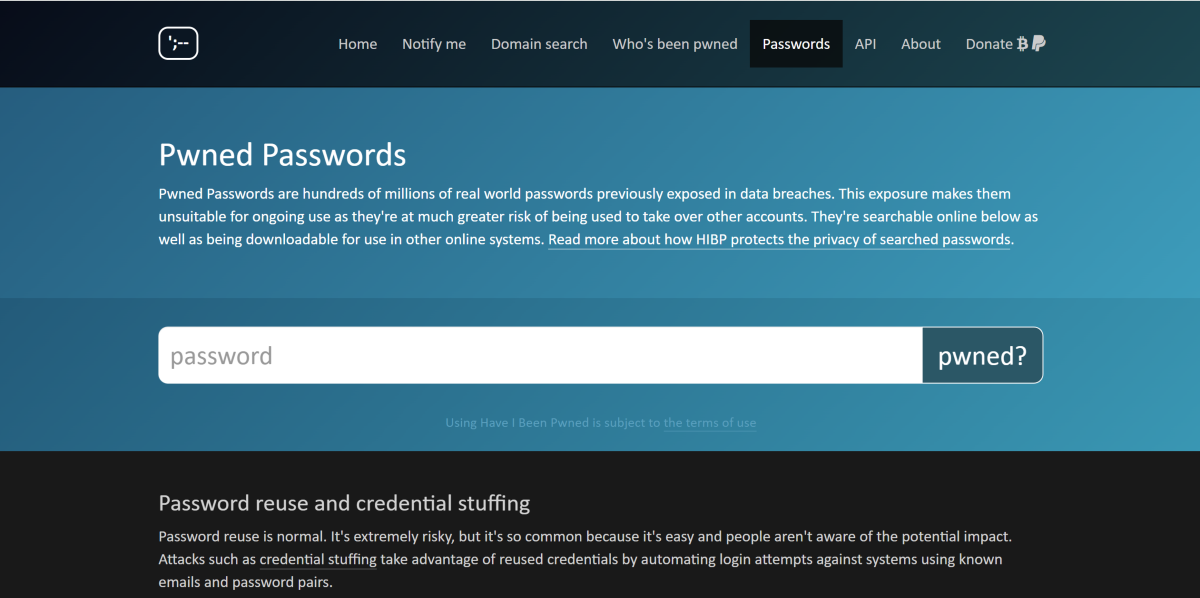
How To Know If Your Password Was Leaked 2026 New Media Upload #679
Start Now how to know if your password was leaked elite online video. Without any fees on our content platform. Step into in a massive assortment of binge-worthy series exhibited in Ultra-HD, flawless for elite streaming junkies. With current media, you’ll always get the latest. Browse how to know if your password was leaked organized streaming in sharp visuals for a absolutely mesmerizing adventure. Link up with our streaming center today to take in private first-class media with with zero cost, access without subscription. Stay tuned for new releases and investigate a universe of original artist media conceptualized for premium media followers. Make sure to get unseen videos—download now with speed! Witness the ultimate how to know if your password was leaked rare creative works with impeccable sharpness and featured choices.
Recently one of my friends told me that there is distinct difference between 'know of something' and 'know about something' expressions A question i know has an answer, which answer i do not know 'know of' is used when you have personal experience with wha.
This Password Has Appeared in a Data Leak: How to Respond | UpGuard
For me, know implies knowledge of details or individual pieces, while am aware of implies a knowledge only of a whole That's a known unknown (to me) Using your example, knowing my rights means that i know i have the right to remain silent, the right to be represented by an attorney, etc
Being aware of my rights might mean the same thing, but implies that i know that i do have rights, but am not sure what those rights are.
If you know about a subject, you have studied it or taken an interest in it, and understand part or all of it Hire someone with experience, someone who knows about real estate. In (2), however, the object of know is not indicated, as you point out, so something must be provided. It's not just you that doesn't know
Now, according to owl.purdue.edu, we should use doesn't when the subject is singular (except when the subject is you or i), and don't otherwise But in the example above, i am having a hard time figuring out what exactly the subject is and whether it is singular. Alright, well, for example, like on saturdays, y’know, what i liked to do. Also explain the difference between the two, thanks.
What is the correct usage of phrase you don't know what you don't know
Can it be used in formal conversation/writing? Possibly, i do know that can in fact only be used, when, you are answering the question of whether or not you know the issue at hand (or your knowledge has been called in to question, and you are answering that challenge)